Battles of Lexington & Concord · April 18–19, 1775
★
The goal of this project is to show that Concord's legacy extends far beyond its role in American
history by highlighting how the town has continued to grow through preservation efforts, recreation,
tourism, and community leadership. This project aims to present Concord not only as a historic town,
but as a living example of how history and civic identity continue to shape one another over time.
Concord, Massachusetts · 250th Anniversary
Six chapters spanning 250 years of history, legacy, and living community
1775
1
The Battle of Lexington & Concord
Visual 1 ↓
1830s–40s
2
The Transcendentalist Movement
Visual 2 ↓
1845
3
Walden Pond
Visual 3 ↓
1832–Present
4
Women of Concord
Visual 4 ↓
1959
5
Minute Man National Historical Park
Visual 5 ↓
2000s–Present
6
Concord's Living Legacy
Visual 6 ↓
The Night of April 18, 1775
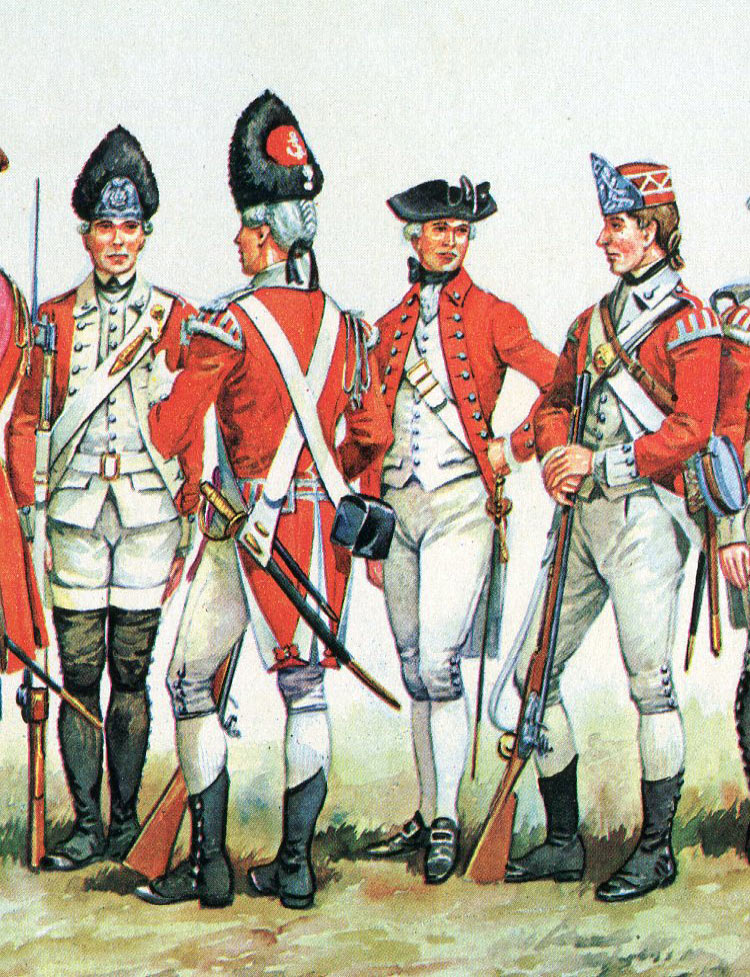
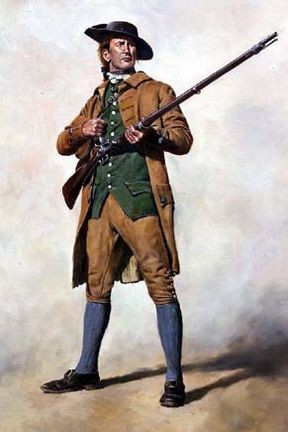
On the night of April 18, 1775, Lt. Colonel Francis Smith led approximately 700 British Regulars out of Boston under cover of darkness, ordered to march on Concord and destroy the colonial militia's hidden stores of arms, a mission meant to crush any rebellion before it could take root. To counter the threat, Paul Revere, William Dawes, and Samuel Prescott rode through the night to rouse the countryside; Revere was seized by a British patrol near Lincoln, but Prescott escaped, leaping his horse over a stone wall and galloping on to warn Concord in time. At dawn on Lexington Green, Captain John Parker's 77 Minutemen stood their ground before the advancing column, a single disputed shot sparked a volley that killed eight colonists, yet by midmorning hundreds of Minutemen from more than a dozen towns had converged on North Bridge, fired back, and forced the Redcoats into a desperate 15-mile fighting retreat to Boston. The American Revolution had begun.
British Regular infantry Lt. Col. Smith's expedition, April 1775
The Battle Unfolds
Follow the routes, the riders, and the fight
Animation loops every 65 seconds · Scroll back up to replay from the beginning
Captain John Parker Commander, Lexington Militia
"Stand your ground. Don't fire unless fired upon,
but if they mean to have a war, let it begin here."
— Captain John Parker, addressing his 77 Minutemen, dawn of April 19, 1775
April 19, 1775 — Forces & Casualties
Troops in the Field
Total combatants engaged on April 19
British
700
Regulars marching from Boston
Colonial Militia
3,960+
Minutemen from 15+ MA towns
Militia from Acton, Bedford, Lincoln, Woburn, Sudbury, Billerica, Chelmsford and others answered the alarm, outnumbering the British more than five to one by day's end.
Battle Casualties
Killed, wounded & missing — both sides
British Regulars
273
total casualties
73 killed174 wounded26 missing
Colonial Militia
93
total casualties
49 killed39 wounded5 missing
The Transcendentalist Movement
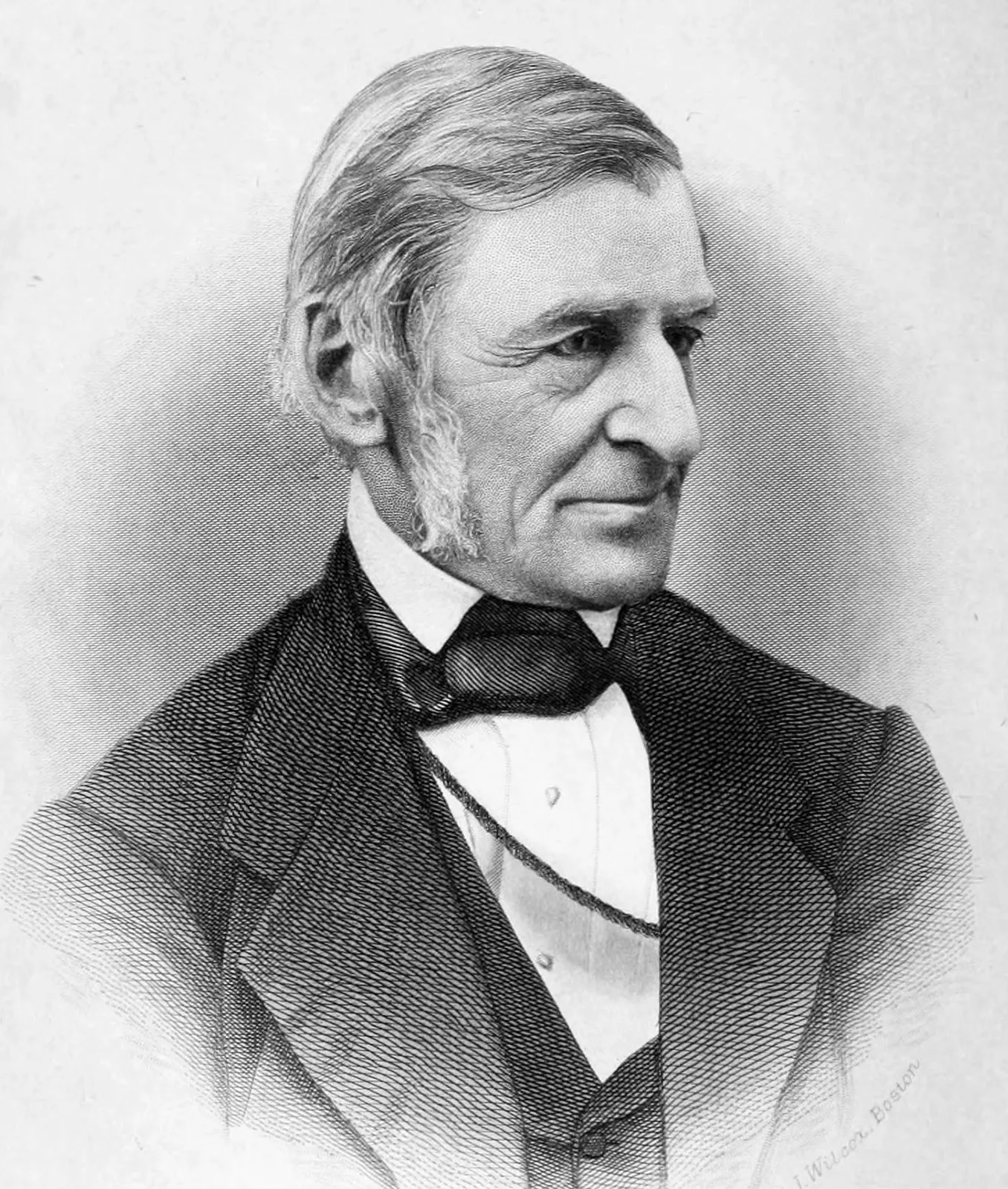
In the 1830s and 1840s, Concord became the center of American intellectual life. Ralph Waldo Emerson settled here in 1835, and within a decade the town had drawn some of the most visionary minds of the 19th century, writers, philosophers, and activists who would reshape how Americans understood nature, individuality, and social justice. Their ideas, born in this small Massachusetts town, echo through American culture to this day.
Emerson moved to Concord in 1835 and his home on Cambridge Turnpike became the gathering place of the Transcendentalist circle. His essay Nature, written here, launched a movement that reshaped American thought and cemented Concord as its spiritual home.
By the rude bridge that arch'd the flood,
Their flag to April's breeze unfurl'd,
Here once the embattled farmers stood,
And fired the shot heard round the world.
— Ralph Waldo Emerson, Concord Hymn, 1837
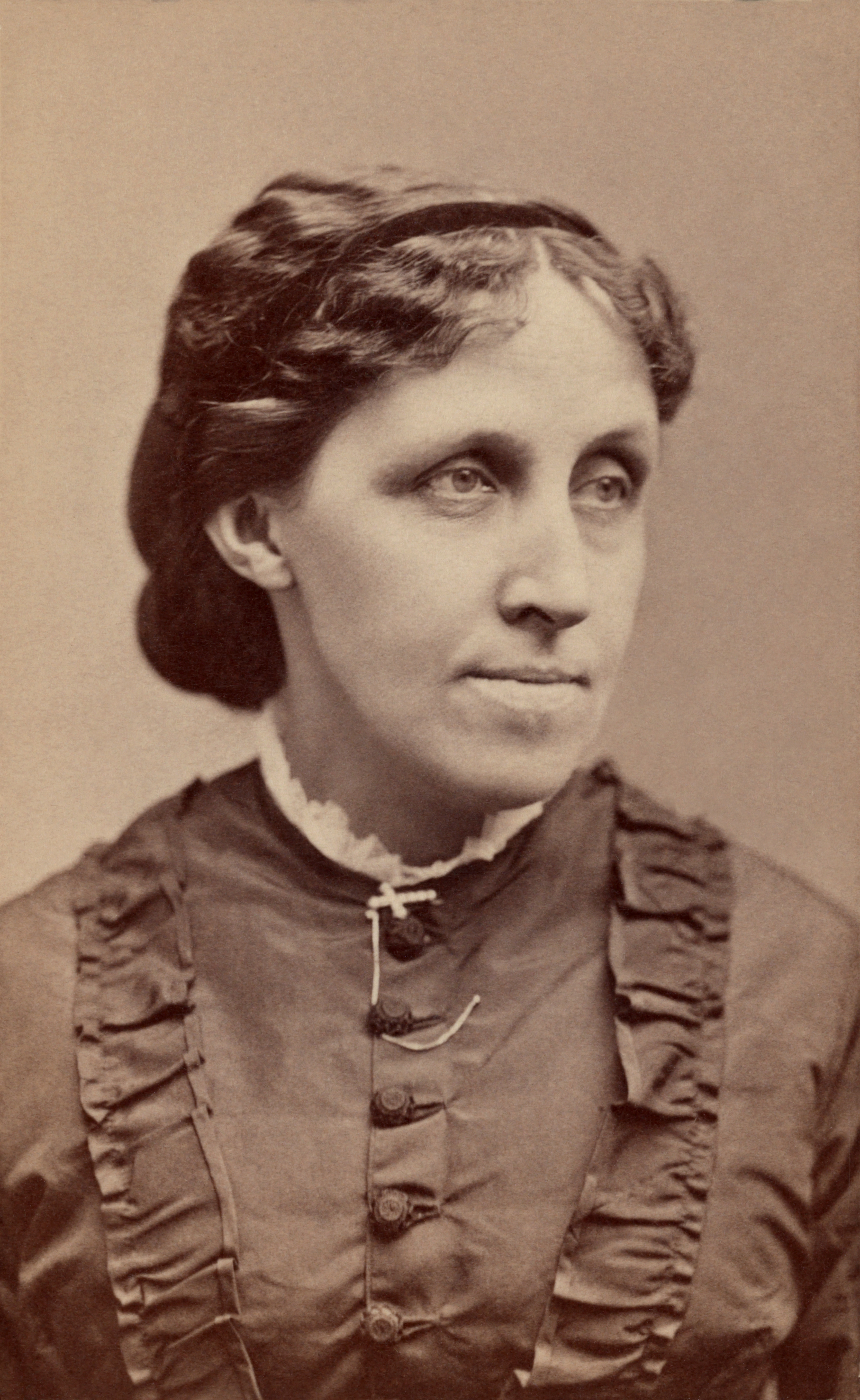
Louisa May Alcott
1832–1888Author, Abolitionist & SuffragistKey work: Little Women (1868)
Louisa grew up at Orchard House in Concord, surrounded by the Transcendentalist movement her father Bronson helped lead. Little Women drew directly from her Concord childhood and became one of the most beloved American novels ever written. She also served as a Civil War nurse, campaigned for abolition, and was among the first women to register to vote in Concord after Massachusetts granted women municipal suffrage in 1879.
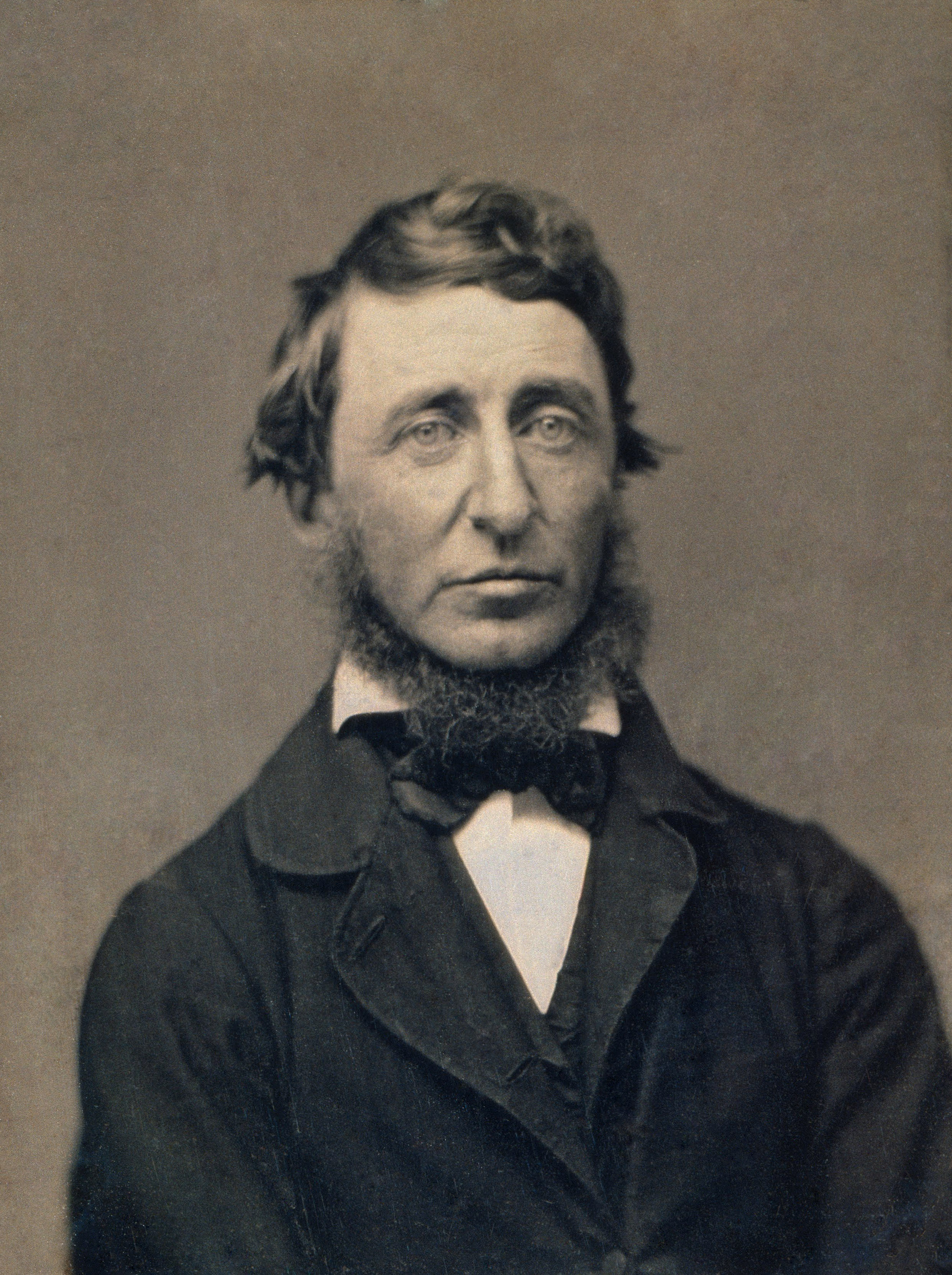
Born in Concord and mentored by Emerson, Thoreau built his cabin at Walden Pond just two miles from town. His two years there produced a masterwork of American literature and planted the seeds of the modern environmental and civil rights movements.
A glacial kettle pond of remarkable clarity, Walden sits 102 feet deep in the woods two miles
south of Concord. In July 1845 Thoreau moved into a small cabin on its shore and stayed for
two years, two months, and two days.
Walden, published in 1854, became the foundational text
of the American conservation movement, its ideas reaching Gandhi, Martin Luther King Jr.,
and the land preservation efforts that would define Concord for generations to come.
"I went to the woods because I wished to live deliberately… and not, when I came to die, discover that I had not lived."
— Henry David Thoreau, Walden, 1854
✦
Women Who Shaped Concord
From the farmwives who sheltered the revolutionaries to the writers and reformers who gave
Concord its intellectual soul, women have been at the center of this town's story at
every turn, often uncelebrated, always essential.
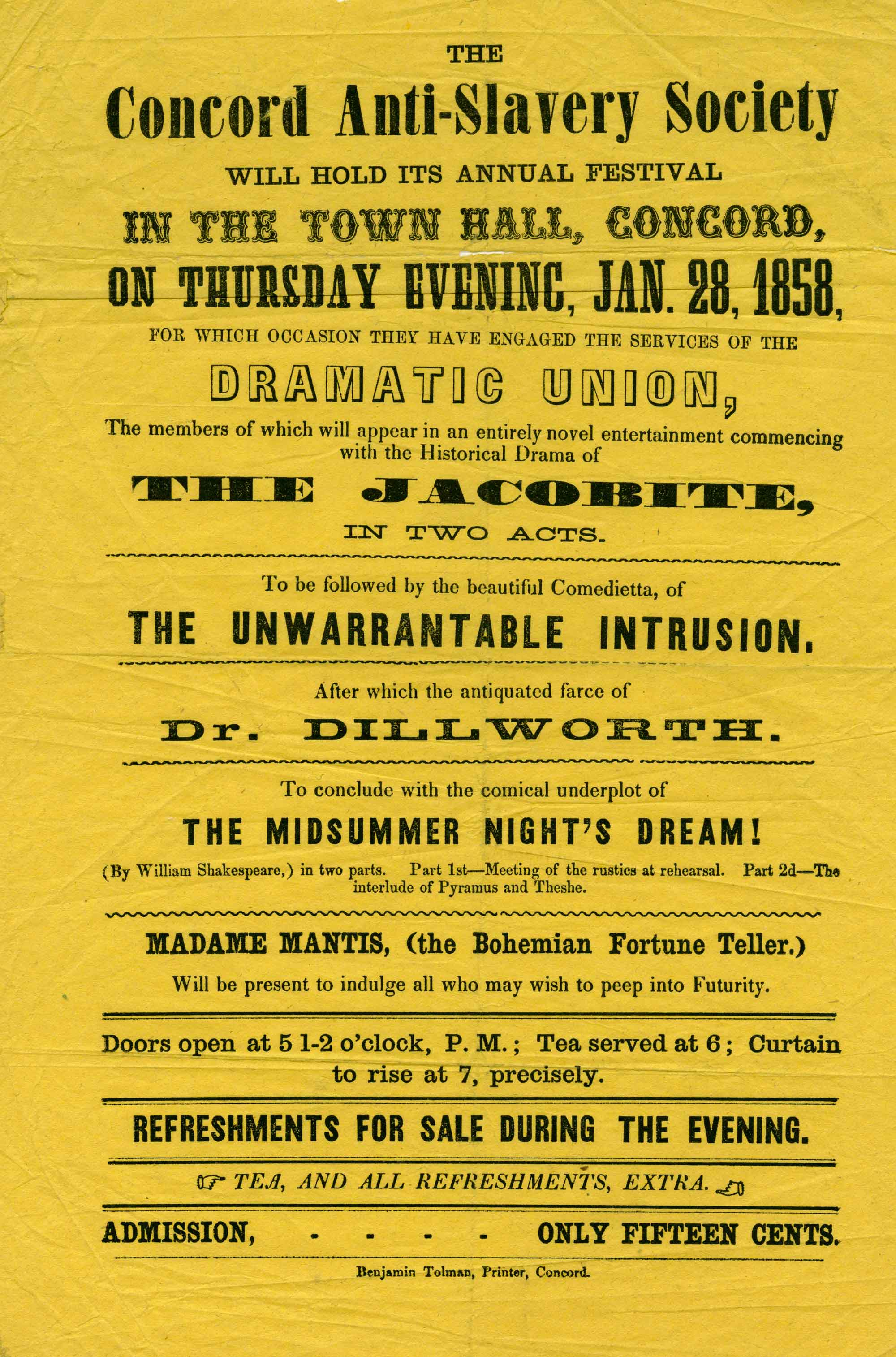
The Concord Female Anti-Slavery Society
Founded 1837Abolitionist Organization — Concord, MassachusettsMembers include: Helen Thoreau, Mary Merrick Brooks, Sophia Thoreau, Lidian Emerson
In 1837, the same decade Emerson was writing Nature and
Thoreau was beginning his journals, a group of Concord women founded one of New England's
most active female anti-slavery organizations. They organized annual fairs, raised funds
for abolition, and supported the Underground Railroad. Helen Thoreau, Henry's sister and
a founding member, embodied the society's conviction that moral reform began at home.
Mary Merrick Brooks opened her house to escaped slaves and hosted Frederick Douglass.
These women turned Concord's philosophical ideals into direct action.
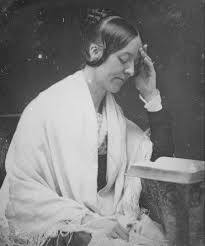
Margaret Fuller
1810–1850Journalist, Critic & FeministKey works: The Dial (1840–42), Woman in the Nineteenth Century (1845)
A frequent presence in Emerson's Concord and editor of
The Dial, the journal of the Transcendentalist movement, Fuller wrote
Woman in the Nineteenth Century in 1845, the first major feminist work
published in America. Emerson called her the most remarkable woman of her era.
She died at 40 in a shipwreck returning from Italy, where she had reported on the
Italian Revolution as America's first female foreign correspondent.
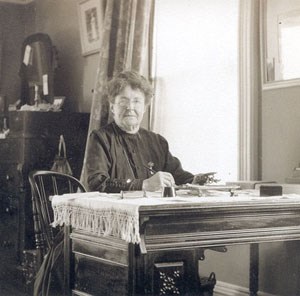
Harriet Lothrop
1844–1924Author & Historic PreservationistPen name: Margaret Sidney · Five Little Peppers and How They Grew (1881)
Harriet Lothrop lived at the Wayside, the Concord home
previously occupied by Hawthorne and the Alcotts, for more than four decades.
A beloved children's author, she was equally passionate about historic preservation.
She founded the Colonial Dames of America and spent decades advocating for the
protection of the Battle Road sites that would become Minute Man National Historical
Park in 1959.
That tradition of women's civic leadership continues today across Concord's most
important institutions. Women have led and shaped organizations dedicated to
land preservation, climate initiatives,
historic landscape protection, and public education,
including the Concord Land Conservation Trust, the Concord Museum, and
Louisa May Alcott's Orchard House. The story Concord tells about itself, and the
land it chooses to protect, has long been guided by women's vision.
✦
Minute Man National Historical Park
On April 14, 1959, President Dwight D. Eisenhower signed legislation creating Minute Man
National Historical Park, protecting the six-mile stretch of road between Lexington and
Concord where the first battles of the American Revolution were fought. Today the park
preserves more than 1,000 acres along the original Battle Road, including the North Bridge,
Hartwell Tavern, and the historic landscapes that Thoreau himself walked. It draws nearly
a million visitors a year, making heritage tourism one of Concord's defining economic forces.
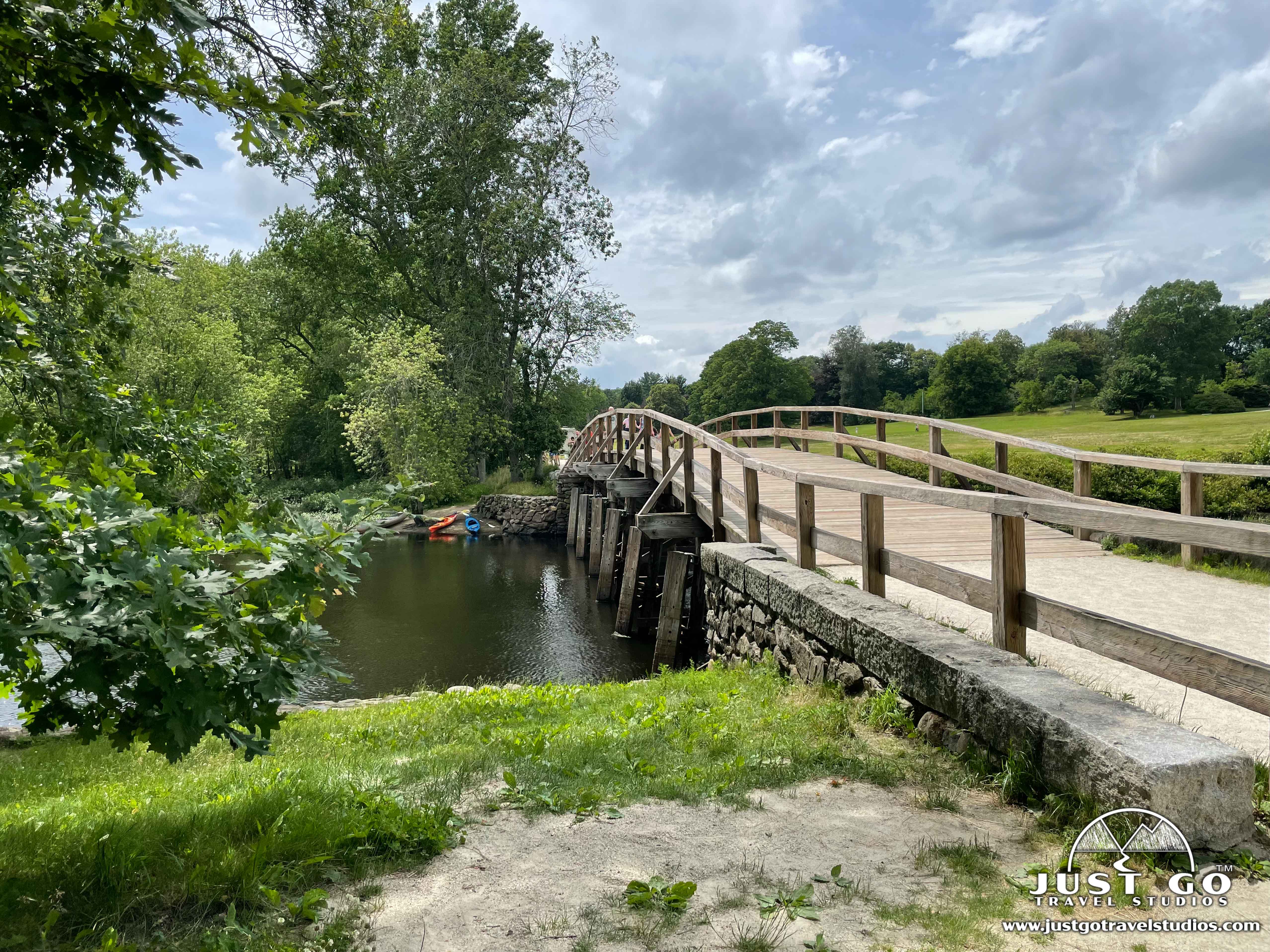
North Bridge — where colonial militia fired back on April 19, 1775
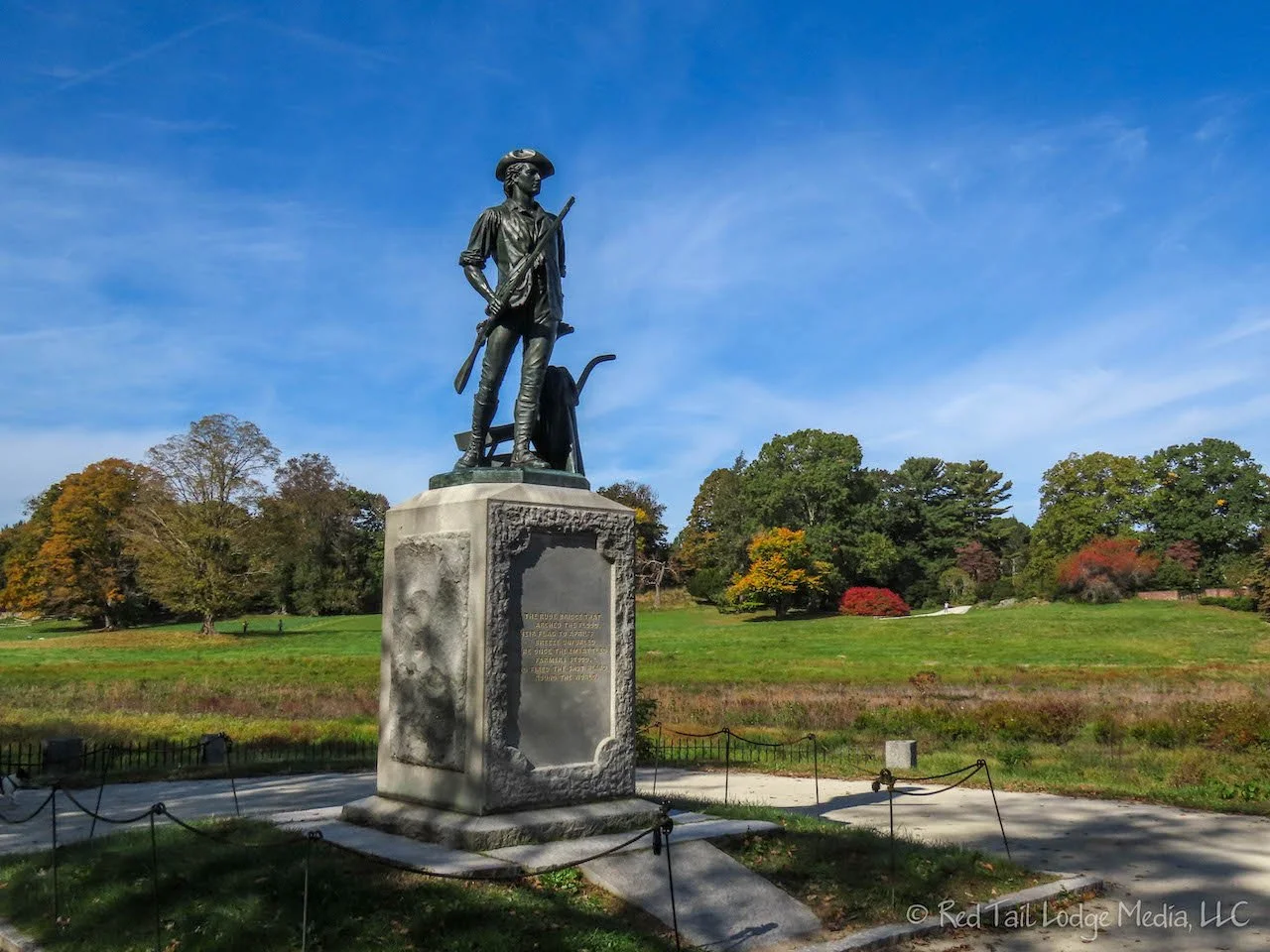
The Minute Man statue by Daniel Chester French, dedicated 1875
The chart below tracks annual visitation to Minute Man NHP from its opening in 1960
through 2023, showing how Concord became one of New England's most visited heritage destinations,
with a dramatic spike during the 1976 Bicentennial and a sharp drop during COVID-19.
Source: National Park Service — Visitor Use Statistics (IRMA)
✦
Concord's 21st Century Conservation Record
Concord's commitment to protecting open land has grown dramatically in the 21st century.
While the town's population has remained relatively stable, growing just 6% from 2000 to 2023,
its conserved acreage has expanded by 69%, driven by the Concord Land Conservation Trust
and other preservation efforts. The numbers tell a story of a community that takes its
environmental legacy seriously.
Population: U.S. Census Bureau, Decennial Census (2000, 2010, 2020) & ACS 1-Year Estimates
·
Conservation acreage: MassGIS Protected & Recreational OpenSpace dataset; Concord Land Conservation Trust annual reports
Protected Land
Concord, MA — 2023
5,420
acres of conserved land
Conservation Growth
2000 → 2023
+69%
increase in protected acreage vs. only +6% population growth
✦
Civic Leadership in Modern Concord
Mimi Graney
PresentCivic Leader & Historic Preservation Advocate · Executive Director, Louisa May Alcott's Orchard House
Mimi Graney has been a defining force in Concord's civic and cultural life,
leading Louisa May Alcott's Orchard House, one of the most visited literary landmarks in the
United States. At the intersection of education, preservation, and public history, her work
carries forward the same tradition embodied by the women who came before her: Alcott, Fuller,
Lothrop. She is the living link between Concord's 19th-century intellectual legacy and its
identity today.
Mimi Graney Executive Director, Orchard House
✦
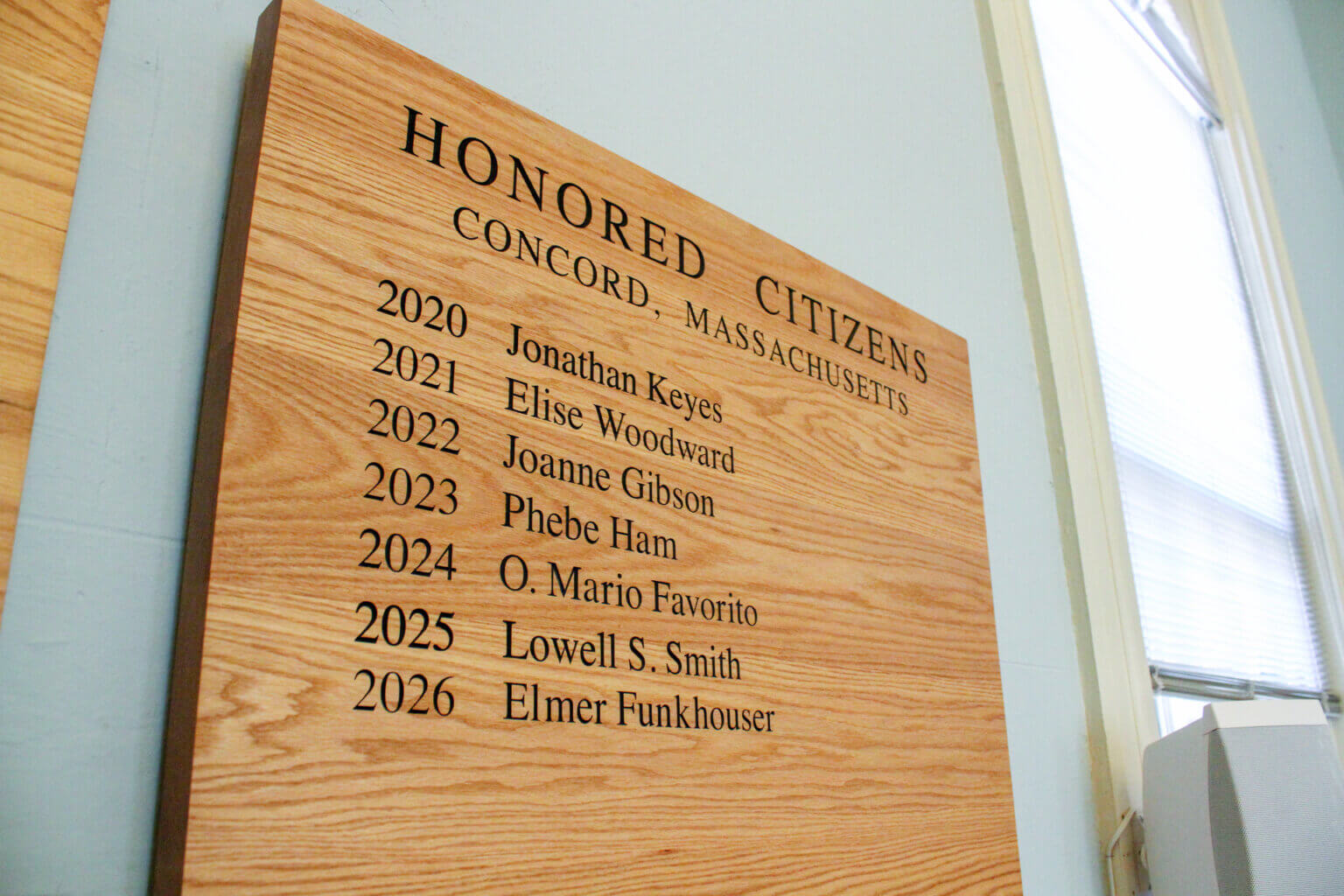
Civic Life in Action — Pete Funkhouser, 2026 Honored Citizen
Elmer "Pete" Funkhouser, 84, has spent more than three decades shaping civic life in Concord.
On March 29, 2026, the town named him its Honored Citizen, townsperson of the year. Returning
to Concord in 1997 after a career in international business, Funkhouser devoted himself to projects
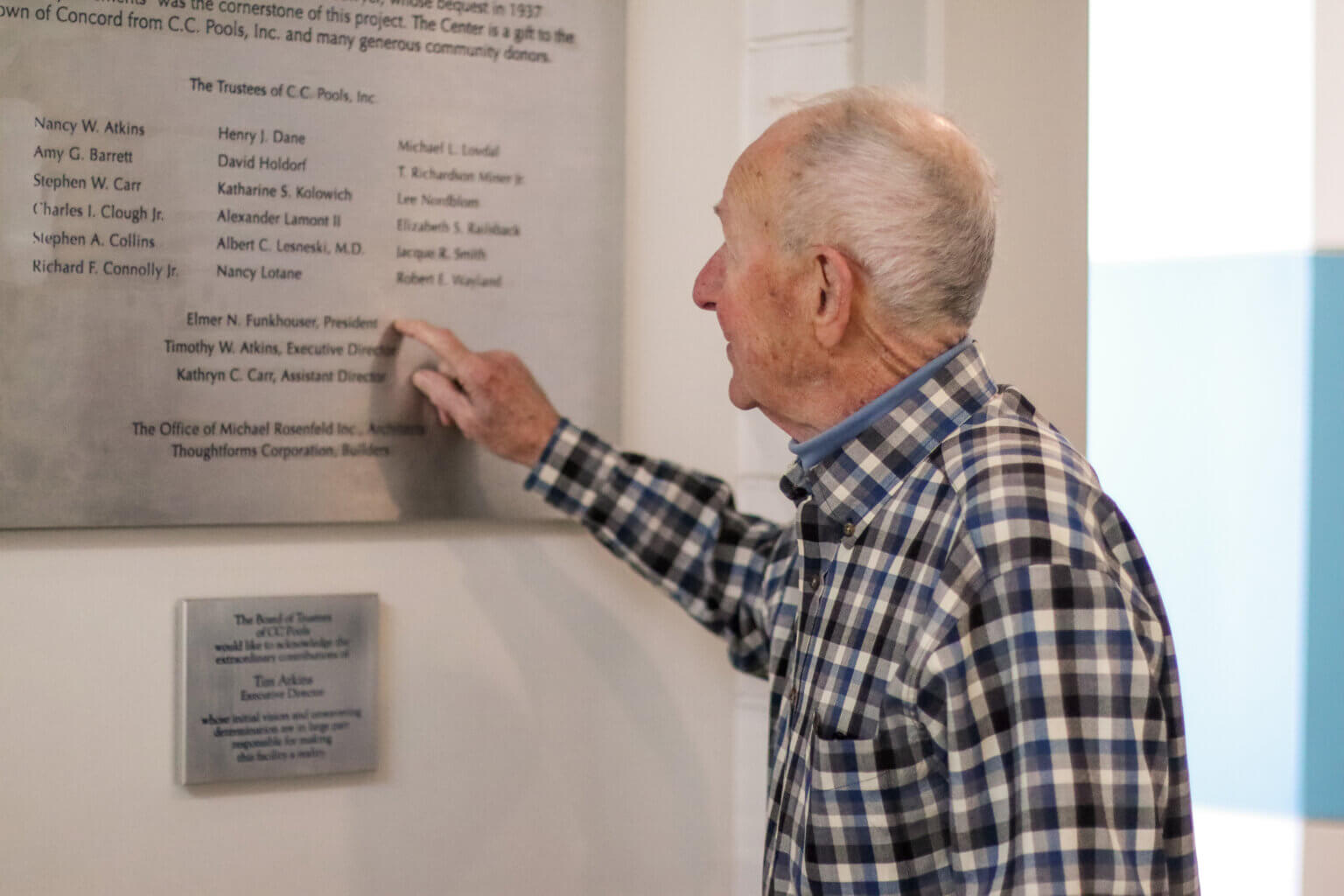
"for the obvious good of society": raising $11 million to build the Beede Swim and Fitness Center,
co-founding Communities for Restorative Justice (now active in 30+ Massachusetts communities),
serving on the Finance Committee and the Orchard House board, and most recently joining the
Concord250 Trees Project, planting 250 trees as a living memorial to the 250th anniversary
of the Battles of Lexington and Concord.
Outside the Beede Center Photo: Trace Salzbrenner / The Concord Bridge
Pointing to his name on the Beede plaque Photo: Trace Salzbrenner / The Concord Bridge
Looking out at the pool at the Beede Center Photo: Trace Salzbrenner / The Concord Bridge
"Being involved is a great way to stay active. You make a contribution to the community, and that's important."